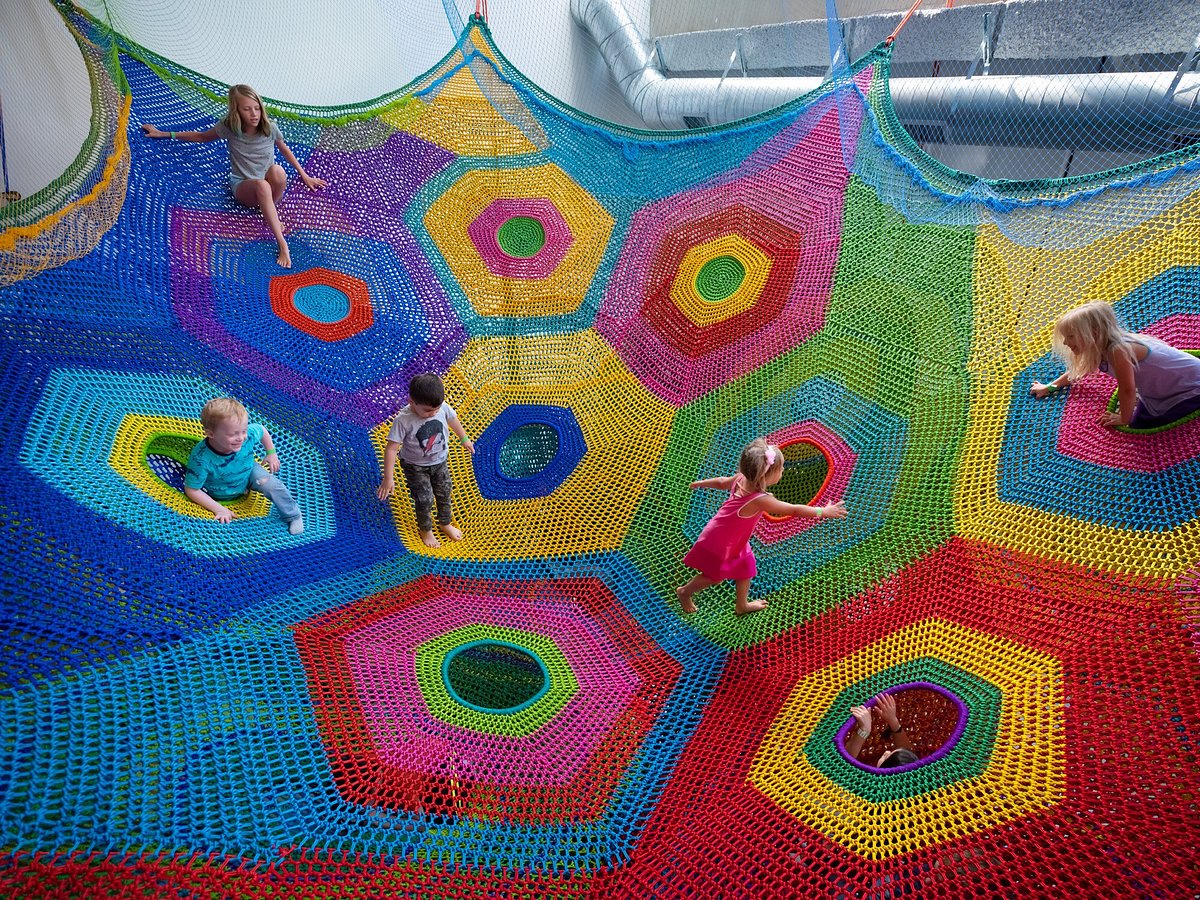
What's inside the Children's Museum San Diego
The New Children's Museum, located downtown, is built specifically around young children's hands-on engagement with art — kids climb, build, paint, and physically interact with rotating exhibits rather than viewing work behind glass the way a traditional art museum works. The design philosophy treats children as active participants in making and experiencing art, not passive visitors, which shows up in everything from the exhibit height (built for small bodies) to the materials used (durable enough for genuinely enthusiastic play).
A dedicated area for infants and toddlers is set apart from the more physically active exhibits aimed at older kids, which keeps the youngest visitors safe from bigger kids' more energetic play without excluding them from the museum entirely.
Ticket prices
| Visitor type | Typical price |
|---|---|
| Everyone (flat rate, incl. adults) | ~$15 |
| Under 1 | Free |
Unlike most museums on this site, admission is a flat per-person rate rather than a discounted child price and separate adult price — everyone accompanying a child pays the same entry fee.
How much time to budget
1.5 to 2.5 hours is typical, though this varies more than almost any other museum on this list depending on how engaged a specific child is with a given exhibit — some kids move through quickly, others plant themselves at one activity for the better part of an hour. Building in flexible time rather than a tight schedule works better here than at a typical museum.
Advanced tip: Because exhibits rotate periodically, a family that visited a year or two ago may find a substantially different set of activities on a return trip — it's worth checking the museum's current exhibit listing rather than assuming it's the same as your last visit, especially if a specific past exhibit was the reason you're returning.
Who this museum is (and isn't) for
This is squarely a children's museum — it's designed around kids roughly ages 1 through 10 and isn't built with an adult-only visit in mind. For a hands-on, photo-friendly museum that works better for teens and adults without kids, see our guide to the Museum of Illusions San Diego instead.
Hours and what visitor reviews tend to say
The museum typically operates Tuesday through Sunday, roughly 9am to 4pm, closed Mondays — a schedule geared toward school-day field trips and weekend family visits rather than late-afternoon or evening access, so this isn't a museum to plan as an after-dinner activity.
The art-based, rotating nature of the exhibits draws the most consistent praise in visitor feedback, especially from families who've been more than once and specifically note that it doesn't feel repetitive the way a static play space would. The most common critique is that it can feel small for a full-price visit if you're only staying an hour, which is really a cue to slow down rather than a size complaint — families who let kids fully engage with one or two exhibits rather than rushing through all of them consistently report a better visit.
Parking near the Children's Museum
As a downtown museum, parking means a paid garage or metered street spot rather than a free lot — there's no dedicated free museum parking the way Balboa Park offers. The nearest paid garages are within a block or two, and validating parking at a specific garage isn't standard here the way it sometimes is at downtown retail, so budgeting for parking as a separate line item from admission is realistic.
Accessibility and practical tips
The museum is fully wheelchair and stroller accessible across its exhibit floors, and changing tables and a nursing area are available for families with infants. Downtown parking means a paid garage or metered street parking rather than a free lot, so budgeting for that is worth factoring into the per-visit cost alongside admission.
Weekday mornings, especially outside school holidays, are the quietest window — weekends and school breaks bring noticeably bigger crowds, since this is one of the default rainy-day and school-break destinations for local families with young kids.
Why the "art museum" framing matters
It's easy to think of this as a generic children's activity center, but the museum's exhibits are deliberately built and curated as art installations first, designed by working artists specifically for interactive, physical engagement rather than passive display — a distinction that shapes what's actually available.
Instead of a fixed permanent play structure the way a typical children's activity center might have, exhibits rotate as new artist-designed installations replace older ones, which means the museum functions more like a rotating contemporary art program built entirely around a young audience than a static play space. For parents who value an art-education angle alongside pure entertainment, that distinction is part of what separates this museum from a standard indoor playground.
This is a museum built to be touched, not just looked at — bring clothes that can handle paint.
What to bring and what to expect
Because the exhibits are genuinely hands-on, closed-toe shoes and clothes you don't mind getting a little messy make the visit smoother than dressing up for a typical museum outing. Snacks and water are worth packing too — there's an on-site café, but bringing your own means less time interrupting active play to leave the exhibit floor. Storage lockers are available for strollers and bags if you'd rather have both hands free while a toddler is climbing through an exhibit.
Plotting a downtown family day? Our San Diego museums map shows this museum next to other nearby stops.
Frequently asked questions
The museum is designed primarily for children roughly ages 1 through 10, with exhibits built for hands-on, physical play rather than passive viewing, though a dedicated infant and toddler area accommodates the youngest visitors separately.
Admission is a flat rate around $15 per person regardless of age, including adults, since the museum charges per visitor rather than by child versus adult pricing.
Yes — the museum rotates its art-based exhibits periodically, so the specific hands-on installations available can differ meaningfully between visits months apart.
1.5 to 2.5 hours is typical, though it varies widely by how engaged a specific child is with a given exhibit — some families stay considerably longer if their kids latch onto one particular activity.