Why San Diego's art scene doesn't have one central district
If you're used to a city with a single arts district — a Chelsea, a Wynwood — San Diego will feel scattered at first. It isn't, exactly; it's just organized around neighborhoods rather than one gallery row. Institutional fine art lives in Balboa Park. Contemporary galleries concentrate in La Jolla and pockets of downtown. Murals and community-driven public art are strongest in specific, historically distinct neighborhoods — Barrio Logan and North Park chief among them. Understanding that split is the difference between a frustrating drive around looking for "the art district" and an evening that actually delivers.
Museum of Contemporary Art San Diego (MCASD)
The Museum of Contemporary Art San Diego is the region's primary institutional home for contemporary art, with a downtown location and a larger La Jolla campus that reopened after a major expansion. Its collection and rotating exhibitions focus on post-1950 work, including significant California and West Coast artists, and it's the closest thing San Diego has to a flagship contemporary art museum comparable to what larger cities maintain.
Institute of Contemporary Art San Diego and smaller galleries
Beyond MCASD, the Institute of Contemporary Art San Diego (with locations across the county) runs rotating exhibitions with a stronger focus on emerging and regional artists than MCASD's larger, more established program. Balboa Park's Spanish Village Art Center is a different model entirely — dozens of working artist studios housed in small cottage buildings, where you can watch painters, potters, and jewelers work and buy directly from the artist rather than through a gallery markup. It's free to walk through and one of the few places in San Diego where the "gallery visit" and "working studio visit" are the same stop.
Barrio Logan and Chicano Park: San Diego's mural district
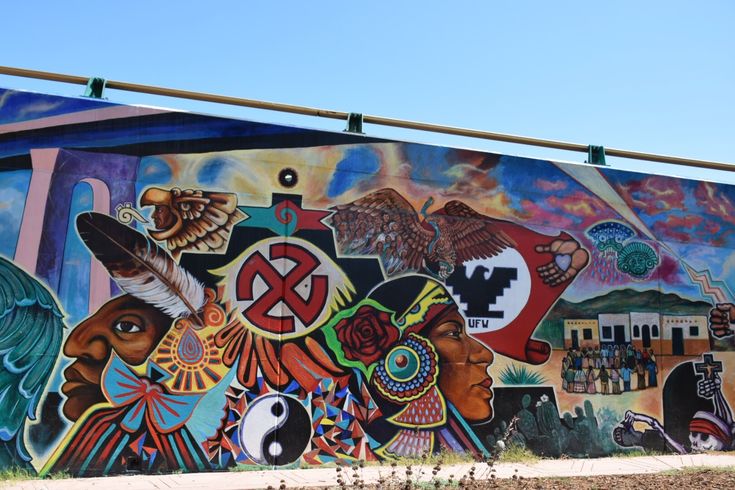
Chicano Park, beneath the Coronado Bridge in Barrio Logan, holds one of the largest concentrations of outdoor murals in the United States — more than 70 murals painted on the freeway's support pylons and retaining walls, most dating from a community art movement that began in the early 1970s after residents occupied the site to prevent it from becoming a highway patrol station. The park was designated a National Historic Landmark, a recognition of both the murals' scale and the specific community history behind them.
Unlike a gallery, there's no ticket and no fixed hours — it's a public park, and the murals are viewable any time, though visiting during daylight is more practical for actually seeing the detail in the artwork.
Advanced tip: Chicano Park's murals aren't a static collection — new murals and restorations are added periodically, and some early-1970s originals have been repainted or touched up over the decades. A visit ten years ago doesn't reflect what's there today; the park is still an active, maintained public art site, not a preserved-in-amber historic display.
North Park's second-Saturday gallery tradition
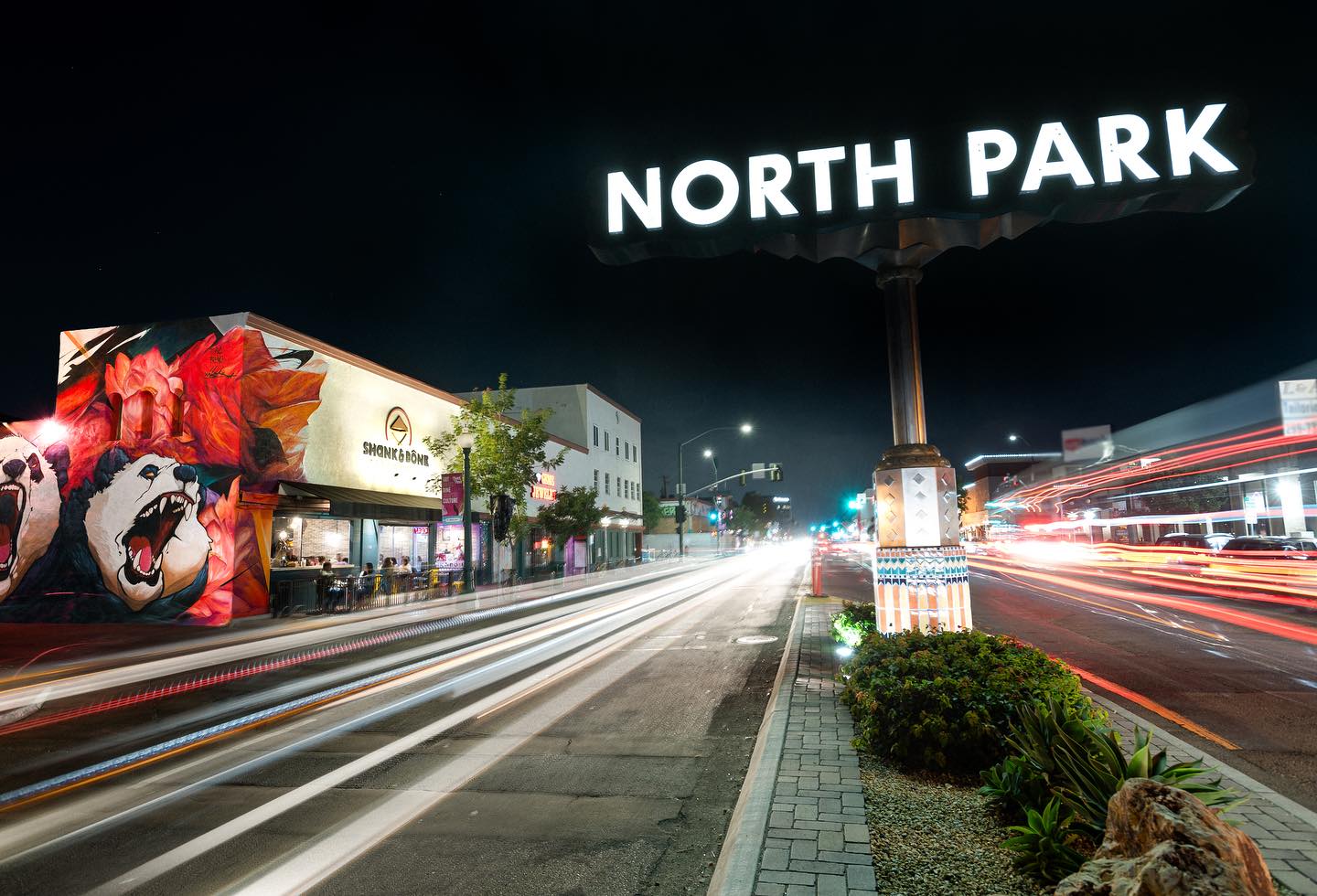
North Park has hosted a recurring second-Saturday-of-the-month art walk tradition for years, where the neighborhood's galleries, studios, and small independent venues open their doors on the same evening, drawing a walkable crowd through a compact commercial strip. This kind of neighborhood-organized gallery walk is common in cities with a strong independent arts scene, and North Park's version has become a fixture of the local calendar — though which specific venues participate, and the exact hours, shift over time as businesses open and close, so checking current listings before you go is worth the two minutes it takes.
Little Italy's art and craft market
Little Italy runs its own periodic art and craft event tied to its long-running farmers' market and restaurant-heavy main strip, though it leans more toward vendor booths, crafts, and food than the gallery-opening format of North Park's walk. It's a reasonable stop if you're already in the neighborhood for dinner, but it's not really a substitute for the gallery-focused experience elsewhere.
| Spot | Format | Cost | Best time to go |
|---|---|---|---|
| MCASD (La Jolla / downtown) | Museum, rotating exhibitions | Paid, periodic free days | Any day during open hours |
| Spanish Village Art Center | Working artist studios | Free to walk through | Weekend afternoons, when more artists are working |
| Chicano Park murals | Outdoor public murals | Free, self-guided | Daylight hours for visibility |
| North Park art walk | Neighborhood gallery walk | Free, self-guided | Second Saturday evening |
| Little Italy art & craft market | Vendor market, tied to farmers' market | Free to browse | Weekend market hours |
Building your own San Diego art evening
- Pick a neighborhood, not a citywide route — Barrio Logan, North Park, and La Jolla are each their own trip, not stops on the same loop.
- For murals, go during daylight; for gallery walks, go in the evening when studios and small venues are actually staffed and open.
- Check current listings for North Park's second-Saturday walk before you go, since participating venues change over time.
- Pair Spanish Village Art Center with a broader Balboa Park museum visit, since it's inside the park and free to add on.
- If MCASD is on your list, check for a free or discounted day rather than defaulting to full-price admission.
Accessibility across San Diego's art spots
Accessibility varies a lot by venue type here, more than at a purpose-built museum. Chicano Park is a paved, level public park and fully accessible for wheelchairs and strollers. MCASD's two locations are fully accessible modern museum buildings. Spanish Village Art Center's individual artist cottages sit at ground level around a central courtyard, generally easy to navigate, though a few studios have narrow doorways typical of older cottage-style buildings. North Park's gallery walk is the most variable, since it's spread across independent small businesses along a commercial strip rather than a single accessible venue — sidewalk quality and individual storefront accessibility differ block to block.
A realistic itinerary for a San Diego art weekend
If you have a full weekend and want a genuine sense of San Diego's art scene rather than one isolated stop, spreading it across two days by neighborhood works better than trying to loop the whole city in one day.
| Day | Morning | Afternoon | Evening |
|---|---|---|---|
| Day 1 | Chicano Park murals (daylight for visibility) | Spanish Village Art Center in Balboa Park | Dinner in Little Italy |
| Day 2 | MCASD La Jolla | Free time / coastline | North Park art walk (second Saturday only) |
The North Park walk is the one fixed-date item on this list — it only happens on its recurring second-Saturday schedule, so it's worth checking the calendar and building the rest of the weekend around that date if attending it matters to you, rather than the reverse.
What to bring for a mural-focused visit
Chicano Park in particular rewards a bit of preparation beyond a typical museum visit: comfortable walking shoes for uneven pavement under the freeway structure, sun protection since much of the park has limited shade, and a wide-angle phone camera setting if you want to capture full mural panels rather than cropped sections — many of the murals are large enough that a standard photo can't take in the whole piece from a normal viewing distance.
San Diego's art scene rewards picking one neighborhood and actually walking it — not chasing a citywide "arts district" that doesn't exist.
For more on when museums across the city offer free or discounted admission, including the free-museum-day rotation that touches several institutions on this list, see our free museum days in San Diego guide.
Respecting the murals and the community behind them
Chicano Park's murals were created by and for the Barrio Logan community, growing directly out of a specific local history rather than being installed as generic public decoration — that context is worth carrying into a visit. Photography is welcome and encouraged, but treating the park as a backdrop for unrelated content, or touching or climbing on the mural surfaces themselves, runs against the spirit of a site the community fought to create and still actively maintains.
Planning by map instead of by list? Our interactive San Diego museums map plots MCASD, the museums near Chicano Park, and the rest of the city's museums, with links to official sites.
Frequently asked questions
Chicano Park in Barrio Logan has the largest and most historically significant concentration of murals in San Diego — dozens of large-scale murals painted on freeway support pylons since the 1970s, recognized as a National Historic Landmark.
Yes — North Park has hosted a recurring second-Saturday-of-the-month art walk tradition for years, where neighborhood galleries, studios, and small venues open their doors on the same evening. Exact participating venues and hours shift over time, so check current listings before you go.
MCASD is not free for general admission, though it periodically offers free days and discounted community hours — check the museum's current schedule rather than assuming a specific day.
San Diego's scene is smaller and more neighborhood-based rather than centered on one gallery district — contemporary galleries cluster in La Jolla and downtown, while murals and community art are concentrated in specific neighborhoods like Barrio Logan and North Park.
Little Italy runs its own periodic art and craft market events tied to its farmers' market, distinct from North Park's gallery-focused art walk — it leans more toward vendor booths and craft than gallery openings.