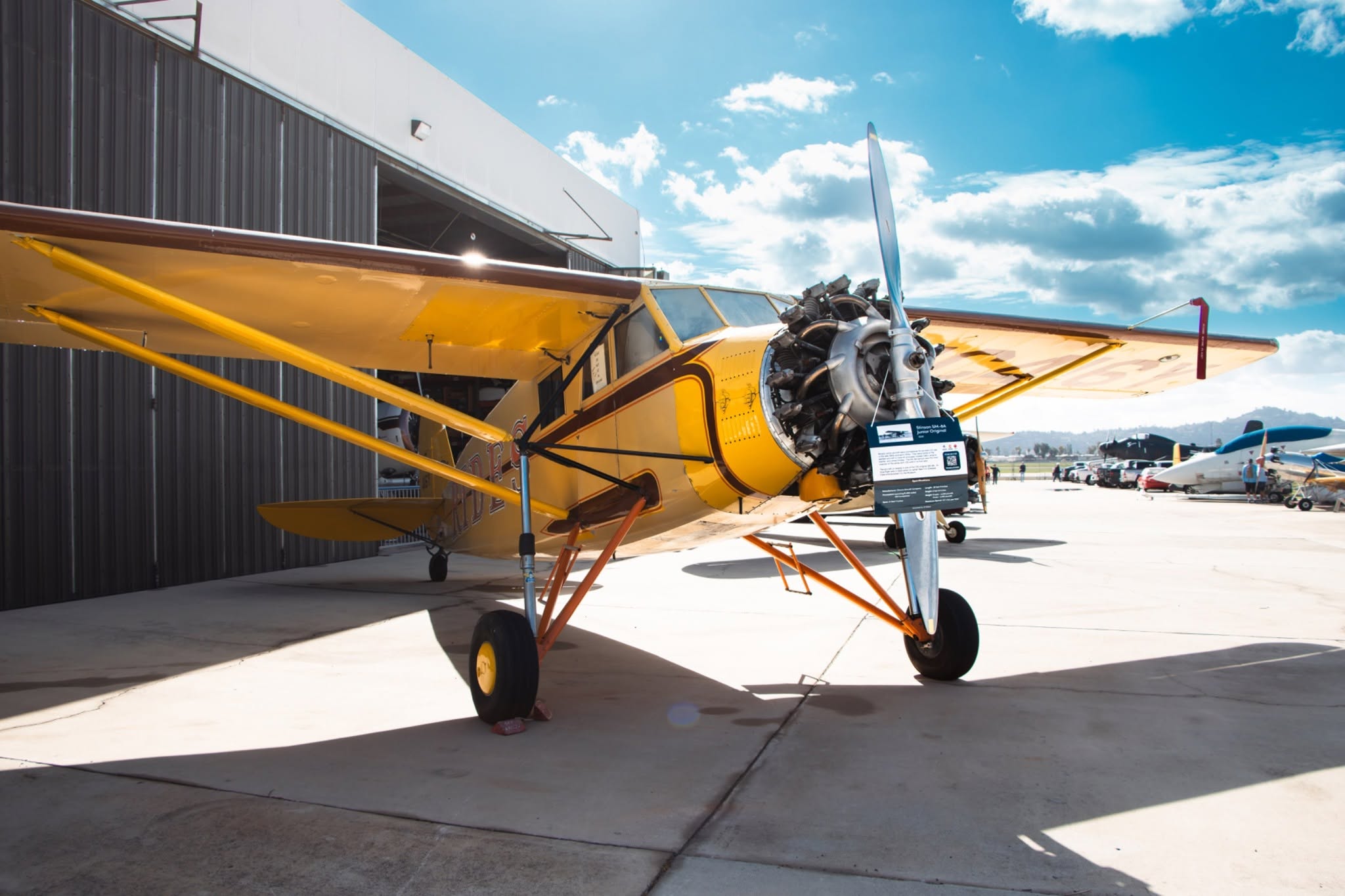
What's inside the San Diego Air and Space Museum
The San Diego Air and Space Museum is housed in the park's circular Ford Building, a shape that works well for its collection of full-size and replica aircraft, from early biplanes through Cold War-era jets and space program artifacts. The museum leans into San Diego's own aviation history more than a generic national air museum would — the city was home to Ryan Aeronautical (builder of Charles Lindbergh's Spirit of St. Louis) and Convair, both major 20th-century aircraft manufacturers, and that local manufacturing history gets real gallery space here rather than a footnote.
Beyond static displays, the museum runs flight simulators and an aviation-focused library and archive that's available to researchers, which is a less-visited but genuinely deep resource for anyone researching specific aircraft or San Diego's manufacturing history.
Ticket prices and booking ahead
| Visitor type | Typical price |
|---|---|
| Adult | ~$25 |
| Senior / student / military | ~$20–22 |
| Youth (3–11) | ~$16 |
| Under 3 | Free |
This is one of the Balboa Park museums most likely to sell out specific entry windows on weekends and school holidays, since it's consistently one of the park's most popular stops. Booking a timed ticket online a few days ahead is the safer move during peak season; on a quiet weekday, walking up without a reservation is usually fine.
Free days
The Air and Space Museum takes part in Balboa Park's rotating free-Tuesday schedule and San Diego Museum Month each February, though because it's one of the more popular museums, free days here tend to draw noticeably bigger crowds than at smaller institutions. If avoiding lines matters more to you than saving on admission, a paid weekday visit may be the better trade. See our free museum days guide for the current schedule.
How much time to budget
Two to three hours covers the main galleries at a normal pace. If you want to try one of the paid flight simulators, budget extra time, since these often form their own separate line and run on a per-session basis rather than being walk-in instant.
Advanced tip: The museum's research library and archive, covering San Diego's aviation manufacturing history, isn't part of the standard exhibit walkthrough and requires a separate visit request — worth knowing if you're researching a specific aircraft or local manufacturer rather than just sightseeing.
Pairing with nearby museums
The museum sits on the Plaza de Balboa, close to the Natural History Museum, Museum of Us, and Fleet Science Center, so it pairs easily with any of those without a long walk. For the full park layout, see our Balboa Park museums guide.
Hours and what visitor reviews tend to say
The museum generally operates daily from about 10am to 5pm, with hours occasionally extended in summer months — the exact seasonal schedule is worth a quick check if you're planning a late-afternoon visit specifically, since an extended-hours day changes how late you can reasonably start.
The restored aircraft and the docent-staffed cockpits get the most consistent praise in visitor feedback — people specifically call out how knowledgeable the volunteer docents are. The most common gripe isn't the exhibits but the simulator experiences: they're popular enough that the line can eat a meaningful chunk of a visit, which is why booking or checking wait times early rather than at the end of your visit tends to work better.
How "discount tickets" actually works here
Rather than public coupon codes, the realistic discount paths are the standard reduced-rate categories — military, student, and senior pricing at the door — plus membership (which pays for itself around the third visit for a family that returns), reciprocal science-museum memberships if you already belong to a participating institution elsewhere, and the citywide options covered in our free museum days guide. Third-party ticket resellers occasionally list this museum, but verifying the seller against the museum's own site is worth the extra minute before paying a markup for something available directly at standard price.
Accessibility and crowd timing
The Ford Building is fully wheelchair accessible on a single main level, with the circular layout making it easy to navigate without backtracking. Free Balboa Park parking near the Pan American Plaza is the closest option, though it competes with Automotive Museum and Model Railroad Museum visitors, so a weekend late-morning arrival often means circling for a spot before walking in.
Because this is consistently one of the park's most-visited museums, weekday visits — particularly Tuesday through Thursday mornings — are meaningfully less crowded than any weekend slot, and simulator wait times in particular drop sharply outside of weekends and school holidays.
The research library, for a different kind of visit
Beyond the exhibit floor, the museum maintains a research library and archive focused on San Diego's aviation manufacturing history — original documents, photographs, and technical records connected to companies like Ryan Aeronautical and Convair. It's not part of the standard walkthrough and generally requires a scheduled appointment rather than a walk-in visit, but for anyone researching a specific historic aircraft, a family member's aviation career, or the region's manufacturing past, it's a genuinely deep resource that most visitors never realize exists behind the public galleries.
The local manufacturing history is what sets this collection apart from a generic national air museum.
Comparing this to the park's other stops? Our San Diego museums map plots all of them, with links to official sites.
Frequently asked questions
Standard adult admission runs around $25, with discounts for seniors, students, active military, and children, and free entry for very young children.
It's not always required, but on weekends and school holidays the museum can sell out specific entry windows, so booking a timed ticket online ahead of a busy-season visit is safer than arriving without one.
San Diego was a major aircraft manufacturing hub for most of the 20th century, home to companies like Ryan Aeronautical and Convair, and the museum's collection reflects that local aviation history alongside broader national and space exhibits.
Two to three hours covers the main galleries and flight simulators at a normal pace, with extra time if you plan to try one of the paid simulator experiences, which often have their own line.